

Modern investigations generate more data than human teams can process quickly. AI enables law enforcement to analyze evidence faster, identify patterns across cases, and clear active investigations more efficiently.
Law enforcement chiefs and sheriffs hear "AI investigation platform" and reactions split. Some see science fiction replacing detectives. Others see expensive technology they do not understand. Both miss what AI actually does: multiply investigator effectiveness on the cases they are working right now.
I have spent 27 years investigating violent crime as an ATF Special Agent. I have worked cases with cutting-edge technology and cases with nothing but shoe leather and witness interviews. Here is what I know: AI does not replace investigation. It accelerates it. The difference matters critically.
What AI actually does is process information at speeds and scales human investigators cannot match. A detective working a fresh homicide faces hundreds of hours of surveillance video, thousands of call records, social media accounts spanning years, and witness statements that need cross-referencing. Manually reviewing all that evidence takes weeks. By then, suspects have fled and witnesses have forgotten details. AI processes the same evidence in hours, flagging what investigators need to see.
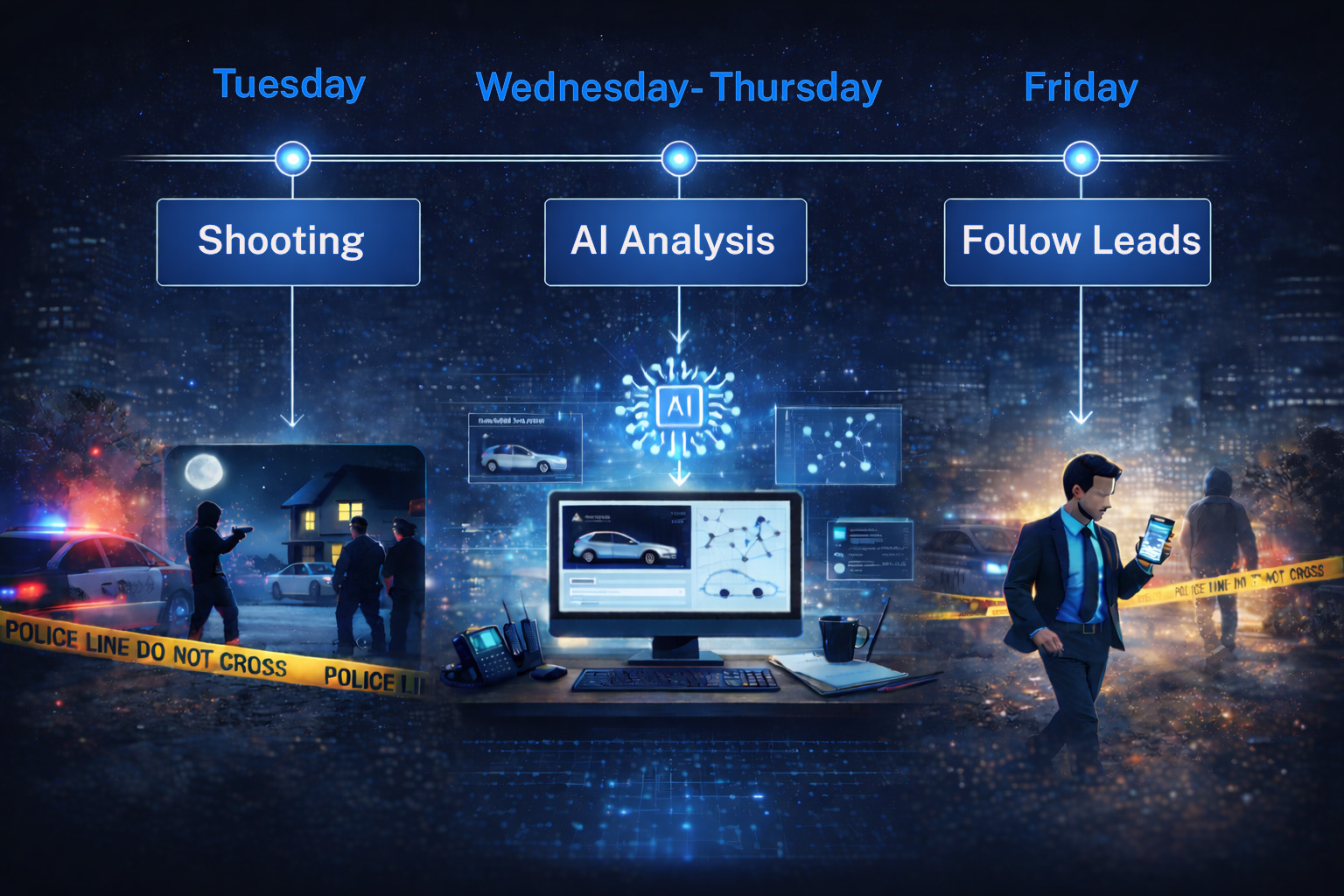
This is not theoretical. It is operational reality. When a shooting happens Tuesday night, your detective gets the case Wednesday morning. ,In minutes, if not seconds, AI has analyzed the data and exposed the potential suspect vehicle in surveillance footage, mapped the social network connections between victim and potential suspects, analyzed communication patterns in the days before the incident, and flagged timeline inconsistencies in witness statements. Your investigator starts working the case by Wednesday afternoon.
Pattern recognition is where AI provides force multiplication most clearly. Criminal networks do not operate in isolation. The robbery crew hitting convenience stores in your jurisdiction has probably hit stores in neighboring cities. The gang member involved in Tuesday's shooting has probably been involved in previous incidents. Traditional investigation requires detectives to remember cases, manually compare details, and hope they spot connections. AI does this automatically across your entire database and, with proper information sharing agreements, across neighboring jurisdictions.
At eSleuth, we designed our platform for active investigations, not just cold cases. Yes, AI helps revive stalled cases by finding connections in old evidence. But the real value is supporting detectives working today's cases. The shooting that happened last night. The robbery series happening this week. The gang conflict escalating right now. These are the investigations where speed matters most.
The constitutional and privacy protections do not change because AI processes information faster. Fourth Amendment requirements still apply. Brady obligations still exist. Chain of custody still matters. We built eSleuth AI with these protections integrated, not added as afterthoughts. The system cannot conduct searches human investigators could not legally conduct. It just conducts authorized searches faster.
The ROI is not measured in solved cold cases, though those matter. It is measured in active cases cleared faster, with stronger evidence, and better outcomes. It is measured in investigator overtime reduced because evidence review that took weeks now takes hours. It is measured in witnesses interviewed while memories are fresh instead of months later.
Walk into the budget meeting with the numbers already run.
Enter your investigator count, fully burdened cost, and the hours your team loses to manual review. You'll see what that time is worth — grounded in data from agencies already running eSleuth AI.
See how eSleuth helps agencies solve more cases with the resources they already have.
Request a Live Demo