

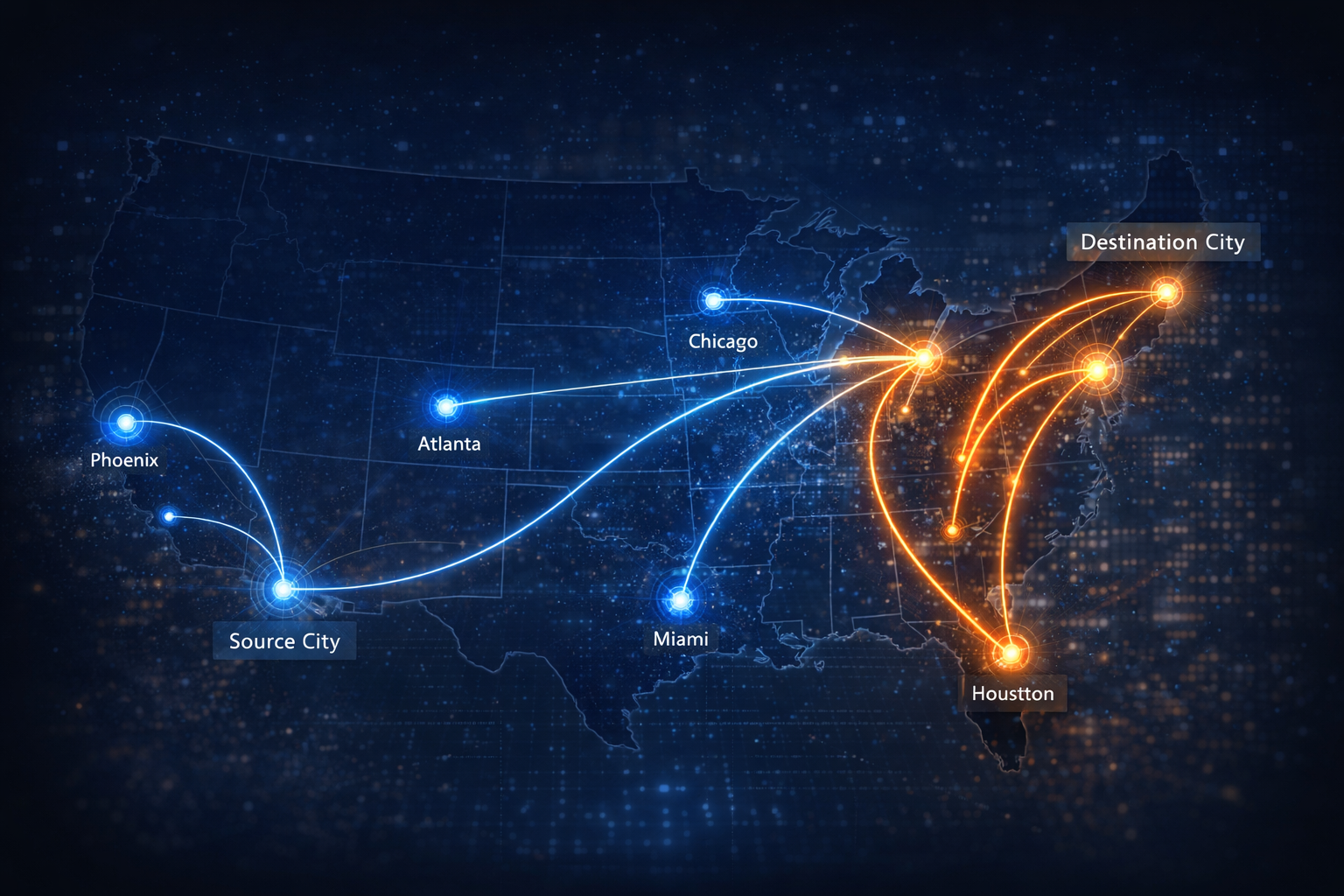
eSleuth AI transforms firearms investigations from reactive tracing to proactive network disruption by identifying trafficking routes, straw purchasing patterns, and cross-jurisdiction connections that traditional tracing alone cannot reveal.
Illegal firearms drive violent crime. Every gun recovered at a homicide scene traveled through a distribution network. Understanding these networks and disrupting trafficking operations requires intelligence that traditional firearms tracing struggles to provide. eSleuth AI transforms firearms investigation from reactive tracing to proactive network disruption.
Traditional firearms tracing has limitations. When law enforcement recovers a crime gun, ATF's eTrace system traces the weapon from manufacturer to Federal Firearms Licensee to an initial retail purchaser. This establishes the gun's legal chain of custody. However, eTrace stops at the first retail sale. It cannot tell investigators how the gun moved from the initial purchaser to the criminal who used it. This gap, often spanning years and multiple transactions, is where trafficking occurs.
The time lag problem compounds investigation. A gun purchased legally in Georgia in 2020 might be recovered at a crime scene in New York in 2024. The four-year gap makes connecting the purchase to the crime difficult. Witnesses' memories fade. Initial purchasers claim the gun was stolen or sold years ago. Traditional investigative methods struggle with these time-lag cases.
Straw purchases drive much trafficking. Someone with a clean record purchases firearms on behalf of prohibited persons. However, proving straw purchases is difficult. The purchaser claims they bought the gun for themselves, and it was subsequently stolen or sold. Pattern analysis across multiple purchases could reveal straw purchasing activity, but human investigators lack capacity to analyze patterns across thousands of gun purchases and subsequent recoveries.
eSleuth AI automatically identifies associations and patterns across all firearms data simultaneously. When the same individual purchases multiple firearms that are later recovered at crime scenes, the system flags potential straw purchasing. When guns purchased in the same city on similar dates all end up recovered in another specific city, the system recognizes trafficking patterns. When multiple purchasers all have connections to the same individual who cannot legally buy guns, the system reveals the network.
eSleuth’s AI Virtual investigators map firearms purchases and recoveries geographically, identifying source cities, destination cities, and trafficking routes. This geographic intelligence shows where guns are entering the illegal market, where they are being used in crimes, and the pathways connecting source to destination. Law enforcement can deploy resources strategically, target enforcement efforts at source cities, and interdict trafficking routes.
The most powerful application is integration with crime data. When a gun is recovered at a crime scene, eSleuth’s virtual investigators immediately cross-reference it against all other crime data. Has this weapon been recovered before? Are other guns from the same initial purchaser linked to crimes? Do crimes involving these guns show patterns suggesting gang activity, robbery crews, or other organized criminal activity? This integration transforms firearms' tracing from identifying a gun's legal provenance to understanding its role in criminal networks.
Rather than reacting to crimes after guns are used, eSleuth AI enables proactive intervention. When pattern analysis reveals potential straw purchasing, investigators can intervene before guns reach the street. When geographic analysis shows trafficking routes, interdiction operations can disrupt supply. When network analysis reveals trafficking organizations, coordinated multi-jurisdiction investigations can dismantle entire operations. This shift from reactive to proactive firearms investigation has potential to prevent violence before it occurs.
Walk into the budget meeting with the numbers already run.
Enter your investigator count, fully burdened cost, and the hours your team loses to manual review. You'll see what that time is worth — grounded in data from agencies already running eSleuth AI.
See how eSleuth helps agencies solve more cases with the resources they already have.
Request a Live Demo