

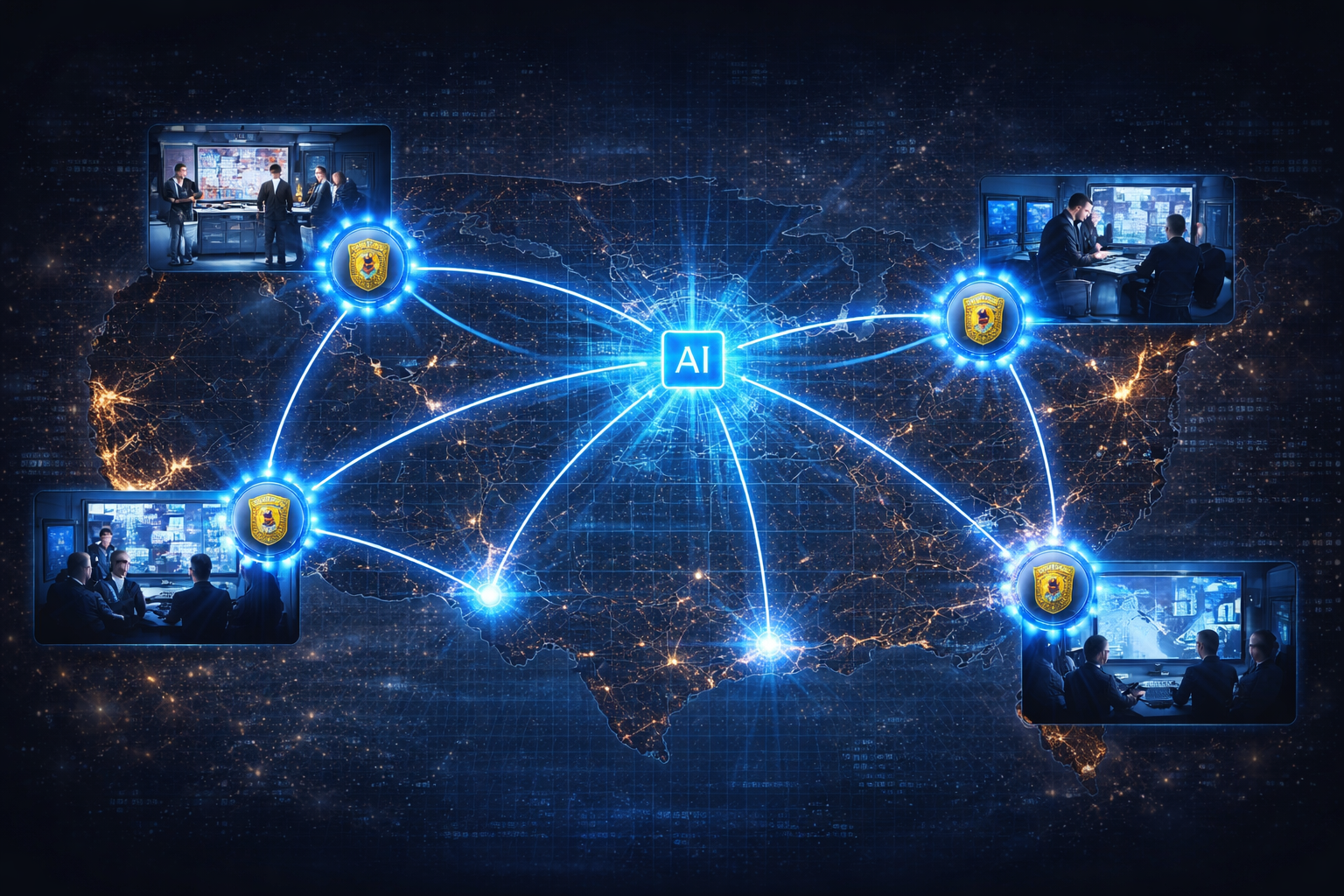
eSleuth AI eliminates jurisdictional silos by enabling real-time, secure information sharing across agencies. By identifying cross-city patterns, shared suspects, vehicles, and communication links, the platform helps law enforcement track criminals who operate across county and state lines.
Criminals do not respect jurisdictional boundaries. A robbery crew operates in three counties. A drug trafficking organization distributes across five states. A murder suspect flees to another jurisdiction. Yet law enforcement remains organized by jurisdiction, creating barriers to effective investigation of crimes that span multiple agencies' territories.
When crimes occur in multiple jurisdictions, information sharing between agencies becomes critical. However, traditional information sharing methods are slow and incomplete. One agency emails case files to another. Investigators schedule phone calls to discuss cases. Task force meetings occur monthly. By the time information flows from one agency to another, days or weeks have passed. Leads grow cold. Suspects disappear. Evidence degrades.
Agencies use different Records Management Systems, Computer-Aided Dispatch systems, evidence management systems, and case management software. These incompatible systems do not communicate with each other. An investigator in one jurisdiction cannot search another jurisdiction's systems to find related cases. Even when agencies want to share information, technical limitations make comprehensive information sharing difficult.
Beyond technical challenges, territorial mindsets impede cross-jurisdictional cooperation. Agencies compete for credit, funding, and media attention. Some agencies view sharing information as losing control of investigations. These cultural barriers, perhaps more than technical limitations, prevent effective cross-jurisdictional investigation.
Serial offenders exploit jurisdictional boundaries. A robbery crew hits liquor stores in four different cities, creating four separate investigations by four different agencies. Unless these agencies communicate effectively, they may never realize they are hunting the same crew. The offenders' pattern becomes invisible because no single agency sees the complete picture.
eSleuth AI creates a unified investigative intelligence platform that agencies can share. Rather than each agency maintaining separate systems that cannot communicate, connected agencies access the same platform. When one agency enters information about a crime, investigation, or suspect, other connected agencies can immediately see it. This unified platform eliminates the information silos that allow criminals to exploit jurisdictional boundaries.
Information sharing through eSleuth AI occurs in real time. When an investigator in one jurisdiction enters new case information, investigators in other jurisdictions receive immediate notifications if the information relates to their cases. A suspect vehicle description in City A automatically alerts investigators in City B who are working a case involving the same vehicle. A phone number found in County X immediately flags for investigators in County Y who have the same number in their files.
eSleuth AI's pattern recognition operates across all connected agencies' data simultaneously. The system automatically identifies associations and patterns across cases regardless of which agency is investigating. A robbery pattern spanning three cities becomes visible even though each city only has two robberies in their own data. A suspect's name appearing in investigations across four counties triggers alerts even though no single county investigator knew about all four cases.
Agencies participating in unified platforms naturally have concerns about security and control. eSleuth AI addresses these concerns through secure access controls. Each agency determines what information to share and with whom. Audit trails document who accesses what information, ensuring accountability. These security features enable information sharing without sacrificing control.
Technology alone cannot eliminate territorial mindsets, but it can reduce the friction that territorial thinking creates. When information sharing is technically seamless, when all participating agencies maintain visibility into investigations, when credit for success is clearly documented for all contributors, territorial barriers decrease. eSleuth AI's transparent, real-time, comprehensive information sharing reduces the incentives for territorial behavior.
Walk into the budget meeting with the numbers already run.
Enter your investigator count, fully burdened cost, and the hours your team loses to manual review. You'll see what that time is worth — grounded in data from agencies already running eSleuth AI.
See how eSleuth helps agencies solve more cases with the resources they already have.
Request a Live Demo